
SSHIFTB News Flash | November 2026
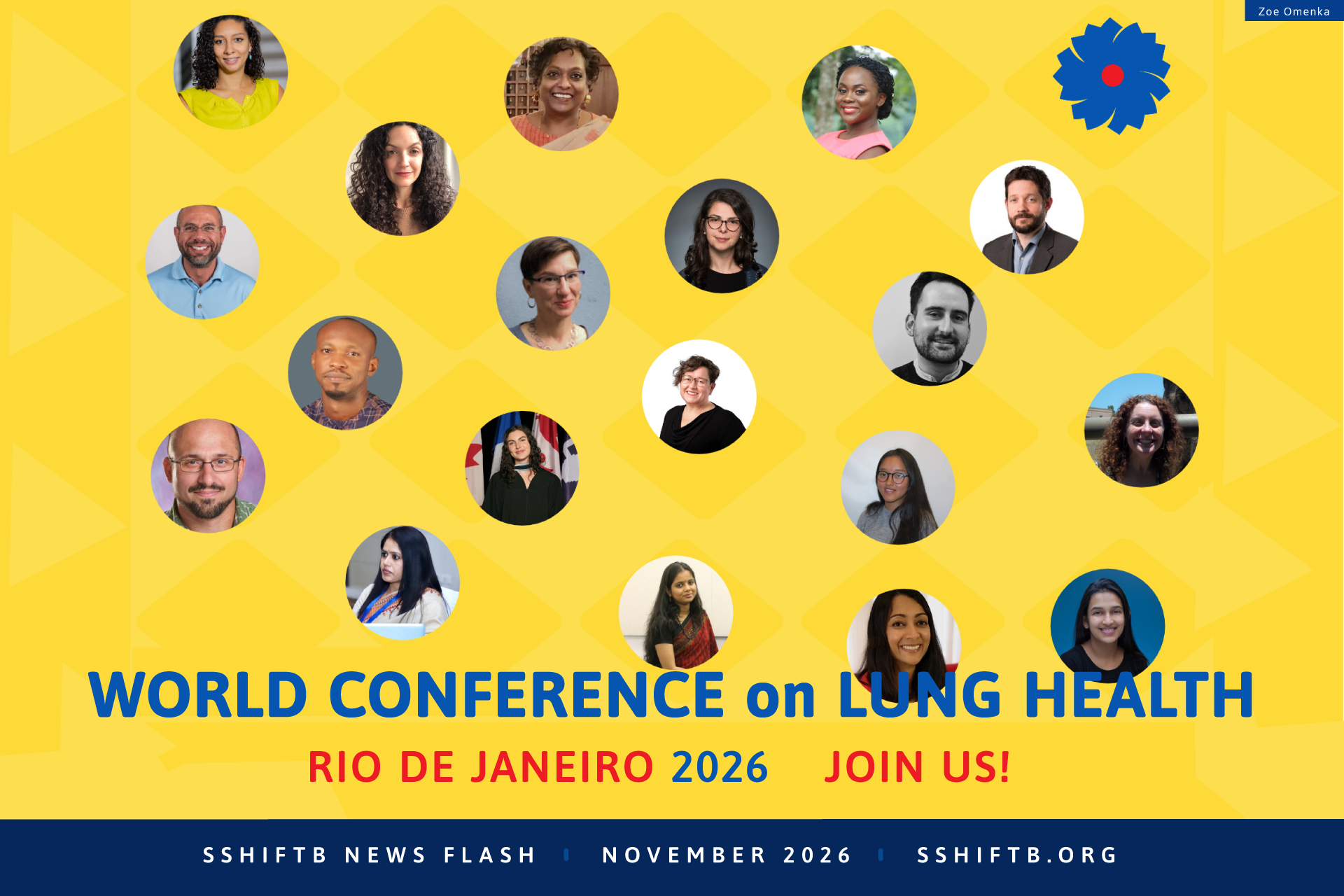
In this issue of our newsletter, we highlight SSHIFTB contributors’ presentations at the 2026 Union World Conference on Lung Health.
Social Science & Health Innovation for Tuberculosis, is a virtual global network of scholars, learners and community representatives amplifying social science research and innovation to address the global TB epidemic.
Welcome to our shared space.
Stay Curious, Stay Informed, Shift Perspectives
In this issue of our newsletter, we highlight SSHIFTB contributors’ presentations at the 2026 Union World Conference on Lung Health.
Advancing TB social science together
The mental health and TB syndemic is a topic that remains under-researched with a significant gap in acknowledging and recognizing patient experiences, particularly in the sub-Saharan African region. In this qualitative study conducted in Zambia, we aimed to explore the lived mental health experiences of TB patients focusing on their multi-layered drivers of distress, and by so doing highlighting contextual factors that influence mental distress in TB patients in this setting.
The study draws on qualitative data collected in 2018 as part of the Tuberculosis Reduction through Expanded Antiretroviral Treatment and Screening for active TB trial (TREATS) being conducted in Zambia. The data was collected through in-depth interviews with former TB patients (n = 80) from 8 urban communities participating in the TREATS trial. Thematic analysis was conducted. Additional quantitative exploratory analysis mapping mental distress symptoms on demographic, social, economic and TB characteristics of participants was conducted.
Most participants (76%) shared that they had experienced some form of mental distress during their TB investigation and treatment period. The reported symptoms ranged in severity. Some participants reported mild distress that did not disrupt their daily lives or ability to adhere to their TB medication, while other participants reported more severe symptoms of distress, for example, 15% of participants shared that they had suicidal ideation and thoughts of self-harm during their time on treatment. Mental distress was driven by unique interactions between individual, social and health level factors most of which were inextricably linked to poverty. Mental distress caused by individual level drivers such as TB morbidity often abated once participants started feeling better, however social, economic and health system level drivers of distress persisted during and beyond TB treatment.
The findings illustrate that mental distress during TB is driven by multi-layered and intersecting stresses, with the economic stress of poverty often being the most powerful driver. Measures are urgently needed to support TB patients during the investigation and treatment phase, including increased availability of mental health services, better social security safety nets during TB treatment, and interventions targeting TB, HIV and mental health stigma.
Keep Informed, and Share