Details
Article of Interest: Kashnitsky, D., Vyatchina, M., Ariabinska, A., Basquin, P., Kasianczuk, M., Kvinikadze, G., Landeau, E., Rabinciuc, V., Rivera, K., Shishniashvili, I., Smirnova, J., Tiuniahina, N., & Simmat-Durand, L. (2026). From barriers to solutions: a qualitative study of access to HIV and TB care for forced migrants from Ukraine. BMC health services research, https://doi.org/10.1186/s12913-025-13946-5
Dr. Kashnitsky is the lead author of a paper recently published in BMC Health Services Research, From barriers to solutions: a qualitative study of access to HIV and TB care for forced migrants from Ukraine. The article offers a critical illustration of the realities and impacts of the Ukraine-Russia war on the lives of people affected by TB, who were displaced and forced to flee their home while also dealing with HIV, substance use, and other complex medical and social challenges. The article also reveals the steadfast and creative efforts of actors on the ground to support people with TB, including those who themselves had fled Ukraine. SSHIFTB readers are invited to read the article in full, engage with the rich quotes, and reflect on the implications. We were delighted at the opportunity to connect with Daniel, who is also a SSHIFTB contributor, and ask some questions of him (and his team) to gain an insider view into this project:
Questions:
1. What makes this paper especially compelling is your team’s engagement with social science theory. You mention drawing on transnationalism as a powerful theoretical framework for migrant health research. You also applied a critical lens in this research. Can you tell us more about these frameworks, and how they deepened your research process?
In this project (called “Ukrainian refugees in receiving countries: barriers, coping strategies and community engagement to enable effective access to HIV and TB care”), transnationalism helped us treat displaced people not as out-of-place patients in a single national system, but as actors whose care trajectories span Ukraine and multiple host and transit countries. That lens pushed us to follow HIV, TB and OAT treatment pathways across borders, including digital platforms, peer networks and cross‑border initiatives that continue care from Ukraine even during war.
At the same time, we used a critical approach: instead of treating barriers as neutral technical problems, we looked directly at how power, exclusion and stigma shape people’s access to care. This informed our participatory action research design: community activists, people living with HIV or affected by TB, and frontline workers co‑shaped the questions, recruitment and interpretation of findings. It also guided our thematic analysis, where we constantly asked whose voices were absent, how legal status, gender, sexuality and criminalization intersected, and how our results could be used for advocacy and system change rather than just description.
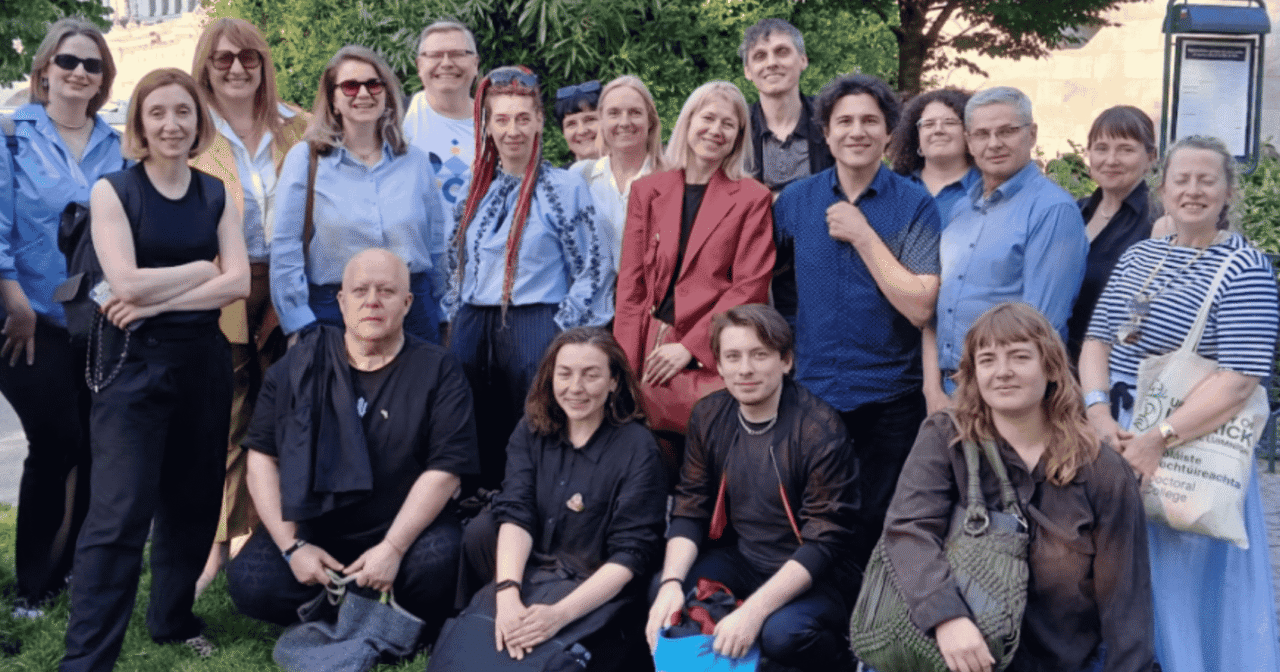
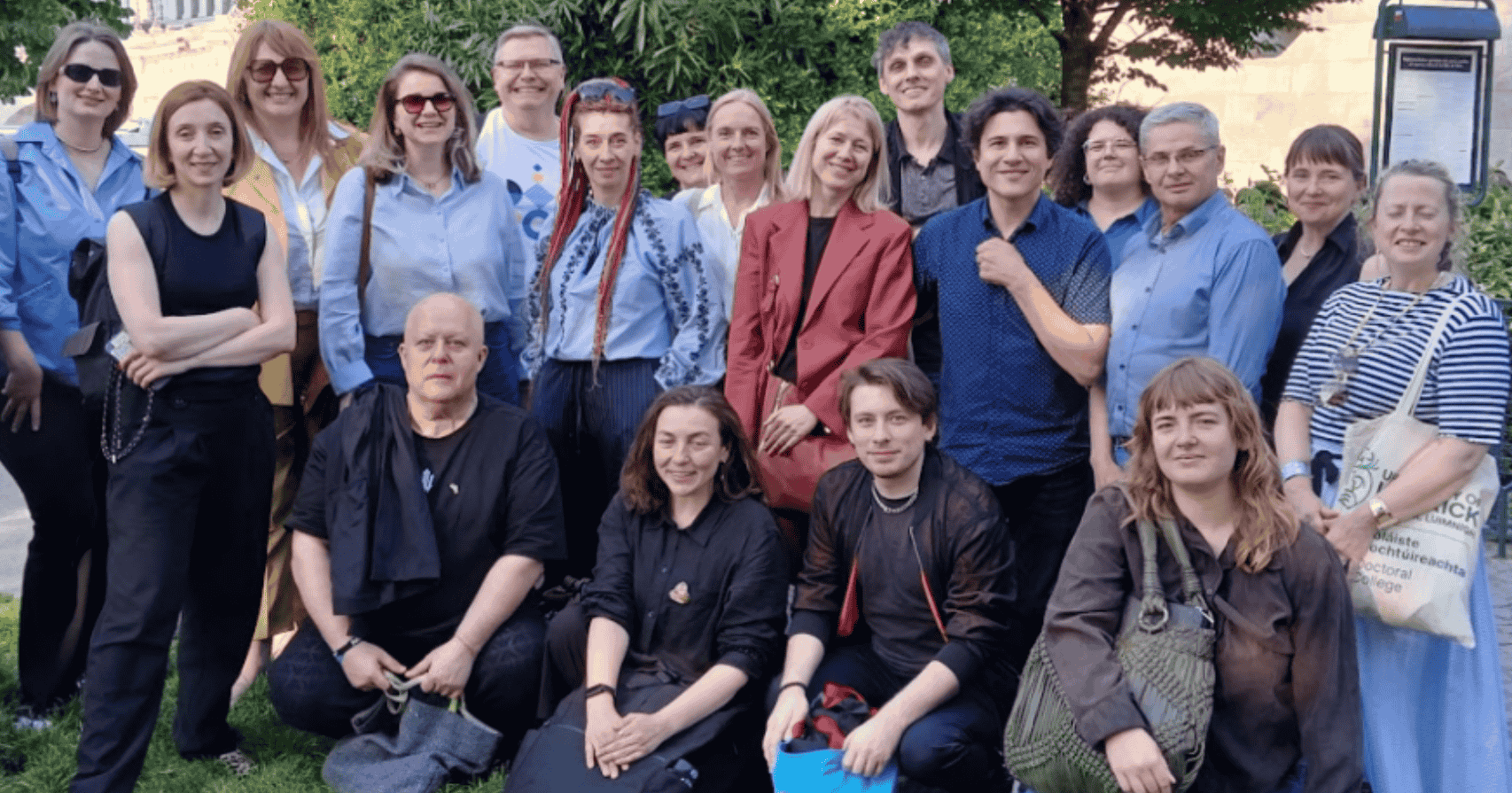
Photo: Dr. Kashnitsky hosts project experts and co-authors at the International seminar in Paris, May 2025
2. What was the biggest challenge in executing this research, specifically recruiting participants, conducting interviews and/or working through the analysis with colleagues from several countries?
One major challenge was working across very different settings: France and Germany with relatively inclusive HIV/TB infrastructures, and non-EU contexts like Moldova and Georgia where health systems, funding streams and legal frameworks are organised quite differently and overall health services are underfunded. This also meant very different roles for civil society – from professionalised NGOs embedded in national programmes with the support of Global Fund grants (Moldova) to newer migrant-led organisations that entered crowded local NGO and service ecosystems (Poland, Germany), where they were sometimes perceived more as competitors than partners.
On the participant side, we were working with people marked by a double vulnerability: the acute emotional impact of war and displacement intersecting with the longterm stigma of living with HIV, TB or opioid dependence. Many had lost not only their care providers and routines, but also networks of trust. Creating interview spaces that were genuinely safe, non-extractive and practically accessible, while navigating legal precarity, language and digital divides, required constant adaptation and very close collaboration with community organisations in each country.
3. What do you hope the main implications of this research will be for migrant policy in the region but, given the times, also in other regions affected by war and crisis?
I hope this research will be used to argue that continuity of HIV, TB and OAT care for displaced Ukrainians cannot be made contingent on the calendar of the Temporary Protection Directive. Across the EU we are approaching a tipping point: in 2027, governments will decide whether people lose the residence rights and health coverage attached to temporary protection, or whether they are offered stable national solutions. Our findings show that interrupting treatment at this point would be both clinically and epidemiologically dangerous and ethically indefensible.
More broadly, we argue that transition plans must protect the community‑based and transnational infrastructures that refugees actually rely on: migrant‑led NGOs, harm reduction projects, cross‑border and digital care networks. This is the message we bring into advocacy spaces – from EU‑level discussions, including European Parliament roundtables, to national stakeholder meetings – and into campaigns such as “Health for Ukrainians beyond March 2027”. The implications go beyond Europe and speak to how any region should organise health protection in long, protracted crises.
4. Do you have a word of advice (or inspiration) for the ambitious student who wants to work with populations affected by TB who are also experiencing living in such charged geopolitical situations?
My main advice is to treat this work as both a privilege and a long-distance run. Populations affected by TB and other socially determined diseases in displacement settings live with overlapping layers of precarity, vulnerability, and stigma. Your first task is to listen carefully, observe without rushing to conclusions, and take people’s time, fears, and priorities seriously.
Try to build long-term relationships with community organisations, not just to collect data and leave, but to co-design your approach, discuss methods and findings, and where possible co-author with community-based researchers. This kind of collaboration strengthens participation and ensures that the work is grounded in lived experience. It is also where you will learn the most, andwhere your research can genuinely make a difference.
At the same time, protect your own boundaries and seek supervision and peer support. In this field you may encounter trauma, institutional bureaucracy, and constant pressure, and it is easy to burn out. Remember that rigorous research—even when it feels slow and modest—can strengthen the arguments of those already fighting for better TB care and for more humane migration and health policies.
