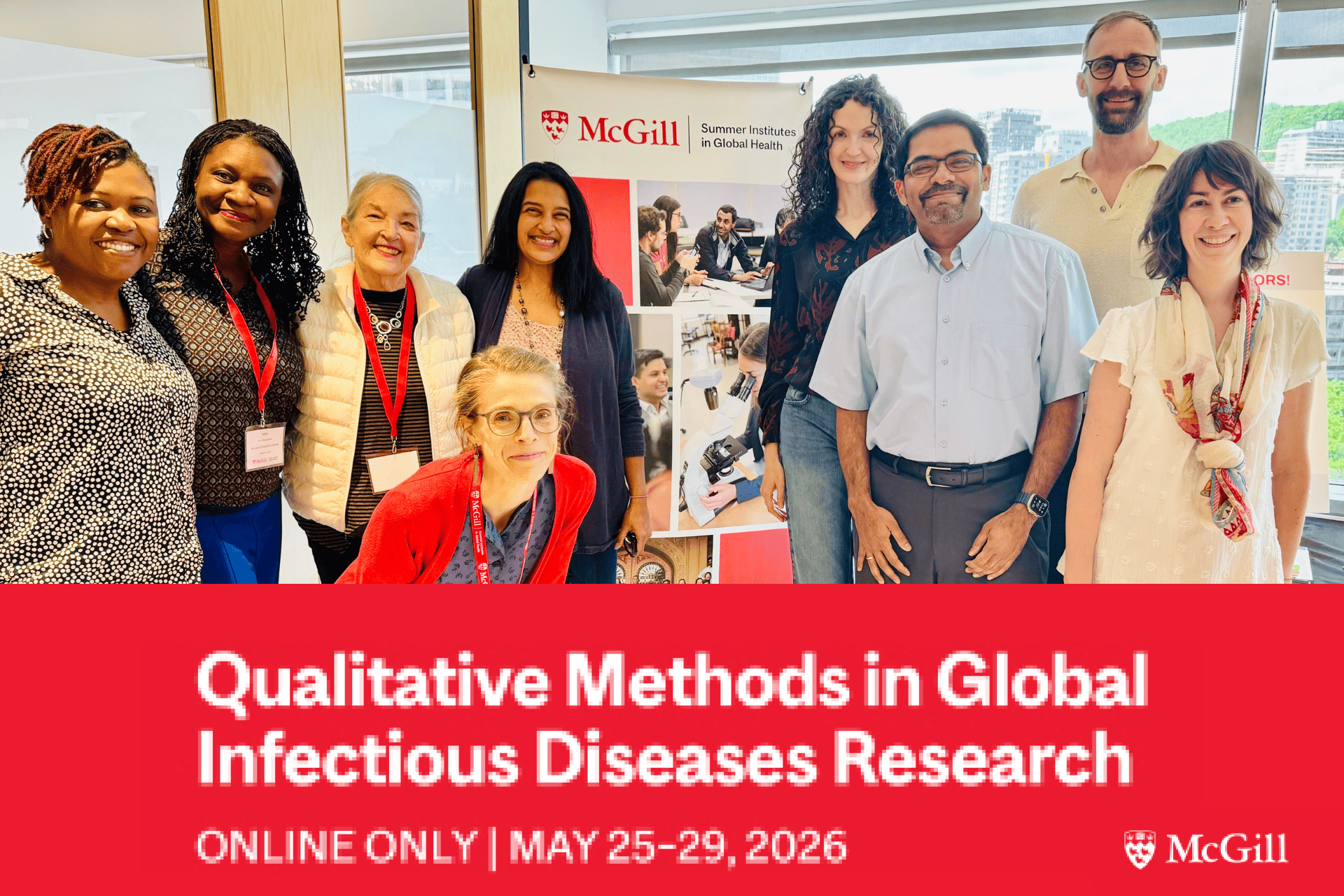
Description
Directed by SSHIFTB leadership, Dr. Amrita Daftary and Dr. Nora Engel
A course focused on the principles and rigorous application of qualitative methods in formative, operational, evaluation and policy research in infectious disease in diverse global settings. Teaching includes didactical lectures, dedicated periods for interactive exercises and short topical presentations and/or panel discussions. There will be opportunities to work in small groups and develop and present draft research protocols and related outputs under the mentorship of course faculty.
Qualitative methods can assess the social and behavioural contexts, and the complex determinants, impacts and outcomes of illness and disease control efforts, including public health programs, policies, and technologies. There is growing interest to integrate qualitative methods into traditional operational and biomedical research to understand challenges to healthcare seeking behaviour and healthcare service delivery, and to better understand how and why some interventions and technologies are successfully (or less successfully) implemented and utilized.
This course will build participants’ research literacy to use qualitative methods to inform, innovate, contextualize, evaluate, and strengthen the delivery and utilization of healthcare services and technologies for infectious diseases (e.g., tuberculosis, HIV, COVID-19) in lower-and middle-income settings.
Tier pricing available. Register by May 1 for discounted rates


